Medical Device

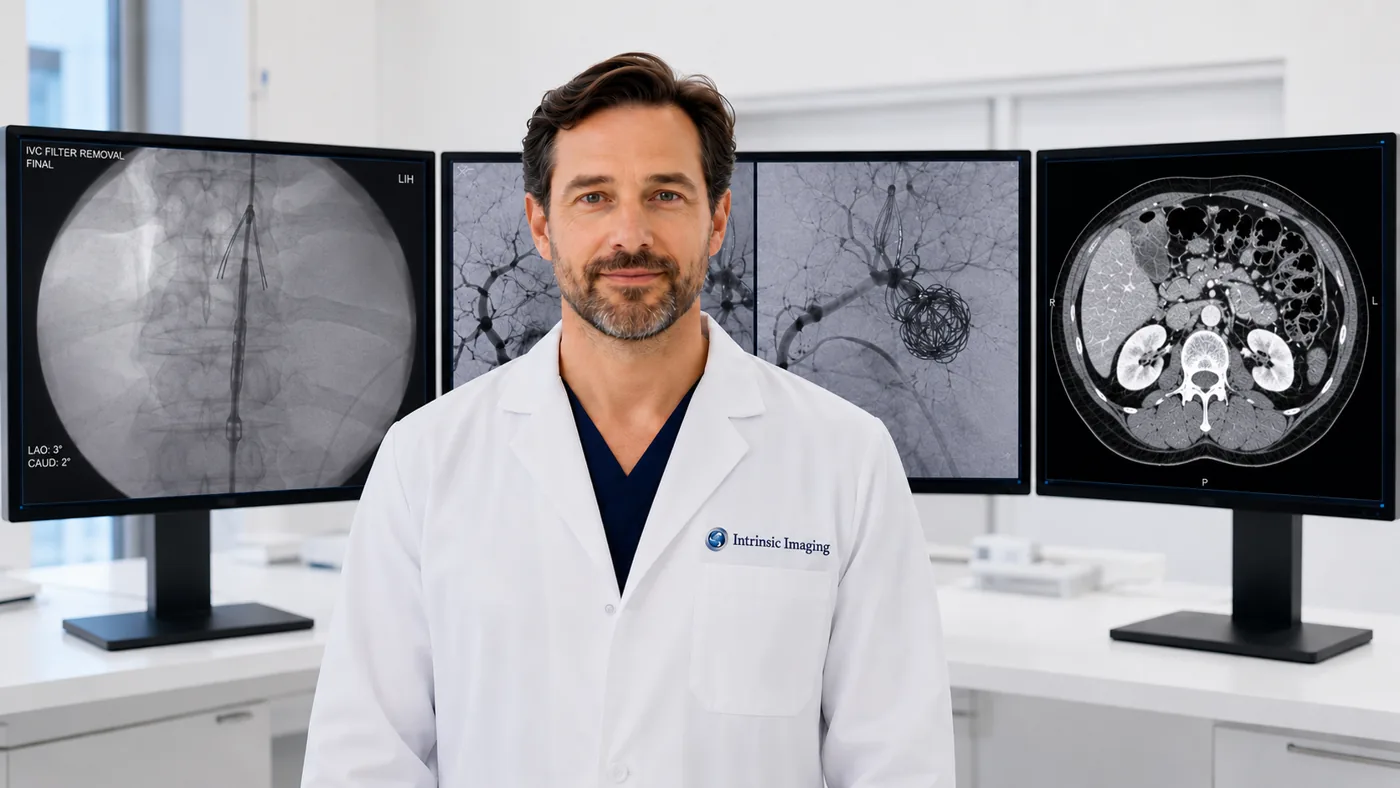
Radiologist in white Intrinsic Imaging lab coat in front of monitors displaying medical devices, stents, and catheter imaging

Medical Device Imaging Division — Medical Device Imaging Core Lab

Our Medical Device Imaging division provides specialized medical imaging core lab services for the clinical evaluation of Class I, II, and III medical devices across a broad range of therapeutic applications and regulatory pathways. Our board-certified, fellowship-trained radiologists combine subspecialty clinical expertise with extensive experience in the imaging-based assessment of medical devices, including implanted devices, stents, catheters, embolization and stroke devices, drug and biologic delivery systems, biopsy equipment, diagnostic software, artificial intelligence and computer-aided detection technologies, and other novel devices.

From early feasibility and proof-of-concept studies through pivotal clinical investigations supporting 510(k) submissions and Premarket Approval (PMA) applications, Intrinsic Imaging works with medical device manufacturers to develop scientifically rigorous imaging strategies capable of objectively evaluating device placement, technical performance, safety, durability, and clinical effectiveness.

Intrinsic Imaging provides comprehensive support throughout the medical device clinical trial lifecycle, including protocol development, imaging endpoint strategy, imaging charter development, modality selection, site and equipment qualification, standardized image acquisition, image quality control, reader training and qualification, centralized independent review, adjudication, quantitative analysis, and regulatory-ready data delivery. Our imaging expertise encompasses CT, advanced three-dimensional imaging and reconstruction techniques, radiography, ultrasound, DXA, nuclear medicine, and PET, with study-specific methodologies developed according to the device, anatomy, mechanism of action, and intended clinical endpoint.

As an ISO 13485-certified imaging core lab, Intrinsic Imaging applies a disciplined quality framework to medical device clinical investigations, with particular emphasis on traceability, reproducibility, standardized assessment, and the reduction of site and reader variability. By integrating regulatory experience, subspecialty physician expertise, sophisticated imaging methodologies, and rigorous quality systems, Intrinsic Imaging provides medical device sponsors with the scientific and operational infrastructure required to generate robust, objective imaging evidence throughout the device development and regulatory approval process.

Medical Device Imaging Division Highlights

  • Board-certified, fellowship-trained radiologists with medical device expertise.
  • Expertise in full complement of medical devices.
  • Expertise executing Class I, II, and III medical device trials in support of 510(k) and PMAs.
  • ISO 13485 certified for providing imaging core lab services on medical device trials.
  • Experts in protocol design and selection of imaging modalities best oriented towards the placement, assessment and evaluation of medical devices.
  • Modality expertise includes:
    • CT, DXA, 3D techniques
    • Nuclear medicine with PET
    • Radiography (CR and DR)
    • Ultrasound

Medical Device & AI Track

Bring Your Device or AI Algorithm to Market

510(k), De Novo & PMA

Imaging endpoint support for Class I, II and III device trials, backed by ISO 13485 certification.

MRMC reader studies

Multi-reader multi-case design and execution for AI/CAD and SaMD — 55+ large MRMC studies completed.

Ground truth panels

Expert adjudication panels drawn from 1000+ board-certified physicians establish reference standards.

FDA inspection readiness

Zero 483 observations across our FDA inspections, including CDRH.

Featured Case Study

Medical Device

IDE Pivotal Transcatheter Valve Trial

  • Structural heart
  • CT, fluoroscopy, echocardiography
  • Pre- and post-implant assessment

Challenge

The transcatheter valve replacement protocol needed precise anatomical sizing before the procedure. It also needed consistent core lab review over time after implantation.

Our Solution

Cardiovascular radiologists and imaging engineers used 3D multiplanar reconstruction and calibrated measurement methods to assess each implant.

Results

  • 100% technical protocol compliance across implant sites
  • Core lab data included in the PMA submission
  • Core laboratory assessments accepted by FDA reviewers
View all case studies

Imaging Core Lab for 510(k), De Novo and PMA Submissions

Our medical device imaging core lab supports Class I, II, and III device trials from early feasibility through pivotal studies supporting 510(k), De Novo, and Premarket Approval (PMA) submissions, with imaging endpoint strategies designed around the device, anatomy, mechanism of action, and intended clinical endpoint.

AI, CAD and Diagnostic Software Validation

We support evaluation of AI software, CAD software, diagnostic software, PACS systems, and radiology viewers, including reader studies run through our Artificial Intelligence Division.

ISO 13485 Quality for Device Trials

As an ISO 13485-certified imaging core lab, we apply a disciplined quality framework emphasizing traceability, reproducibility, standardized assessment, and reduced reader variability.

Frequently Asked Questions

Which regulatory pathways do you support?
510(k), De Novo, and PMA submissions for Class I, II, and III devices.
Which device types have you evaluated?
Implanted devices, stents, catheters, embolization and stroke devices, drug delivery devices, biopsy equipment, biologics, and AI/CAD/diagnostic software.
Is your core lab ISO 13485 certified?
Yes, for providing imaging core lab services on medical device trials.

Medical Device Evidence Planning and Study Delivery

We build the imaging workstream around intended use, device risk, anatomy and the evidence needed for the sponsor’s chosen regulatory pathway. The regulatory authority determines submission requirements and authorization; our role is to generate independent, traceable imaging evidence.

Pathway or stageImaging planningEvidence output
Early feasibility and IDE studiesDefine imaging safety and performance measures; align acquisition with investigational useFeasibility reads, quality findings and protocol-defined device assessments
510(k)Align imaging evidence with the substantial-equivalence question and comparison designIndependent performance data and documented assessment methods
De NovoPlan evidence for a novel device and its intended clinical useSafety and performance imaging results with traceable review records
PMA and pivotal studiesPrespecify endpoints, blinding, adjudication and analysis populationsCentral-review datasets and study documentation for submission support
Post-market studiesMaintain consistent surveillance and follow-up assessmentLongitudinal device findings and imaging endpoint data

From Endpoint Strategy to Database Lock

At planning, we review the protocol, imaging schedule, device mechanism and reference method. Startup covers charter approval, system configuration, site qualification and reader training. During execution, we manage image receipt, quality queries, independent reads and adjudication. Closeout reconciles missing examinations, resolves data queries and delivers the agreed datasets and supporting records.

A study-specific schedule identifies dependencies such as protocol approval, case availability, site readiness and reader qualification. Milestones and turnaround expectations are agreed for the actual scope rather than presented as a universal device-trial timeline.

Implants, Interventions and Diagnostic Devices

For implanted and interventional devices, imaging can evaluate positioning, deployment, patency, alignment, healing and anatomical or functional change. Acquisition and measurement rules define how device-related findings are separated from underlying disease.

Diagnostic devices and imaging software may require stand-alone performance evaluation, comparative reads or MRMC observer-performance studies. We align the reader population, comparator, reference standard and endpoints with intended use and the regulatory question.

Regulatory Collaboration and Traceable Deliverables

We support imaging-methodology input for FDA pre-submission discussions and responses to imaging-related questions. Deliverables include the imaging charter, qualification records, quality-control history, central assessments, adjudication records and reconciled data transfers. ISO 13485 provides a quality-management framework for these services; it is not a device clearance or a guarantee of approval.

Direct physician access

Work Directly With Our Medical Leadership

  • • Your medical monitor talks directly to board-certified physicians — no intermediary layers.
  • • Physicians help author your imaging charter and resolve reader discrepancies.
  • • The same leadership team stays with your study from kickoff to database lock.
Meet Our Leadership
  • 3 FDA inspections

    Zero 483 observations

  • 5 BSI ISO certifications

    9001, 13485, 22301, 27001, 27018

  • 1000+ physicians

    Board-certified, fellowship-trained

Planning a medical device trial? Our subspecialists can help.

Partner With Us